Insurance
It’s important that you look into your insurance obligations and options.
Some types of private insurance are legally required, while others are optional but widely used and strongly recommended for additional protection.
Denmark has a strong public and social welfare system, but it does not cover all situations. Planning ahead and taking out the right insurance can help you avoid high unexpected expenses if something goes wrong.
Legally required and recommended insurance
Legally required insurance
Legally required insurance
Some types of insurance are required by Danish law, depending on the situation.
- Liability insurance for motor vehicles: Required if you own a registered motor vehicle such as a car or a motorcycle.
- Dog liability insurance: Required if you own a dog.
- Horse liability insurance: Required if you own a horse.
If you buy a house with a mortgage, your bank will usually require you to have fire insurance (as a minimum) as part of the loan agreement. This is a requirement set by the bank, not by law.
More information and links
Visit the Life in Denmark website for a general introduction to insurance in Denmark, where you also can find more information about the compulsory liability insurance for motor vehicles.
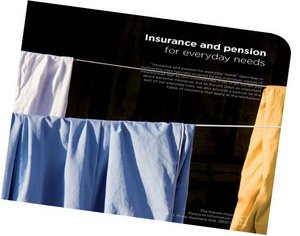
For more information about typical risks covered (and not covered) by various types of insurance, please see the booklet Insurance and Pension for Everyday Needs, published by Danish Insurance Information Service.
Recommended insurance
Recommended insurance
While not legally required, several types of private insurance are widely used in Denmark and strongly recommended. These types of insurance help protect you against common risks and reduce potential financial loss.
- Home contents insurance* (indboforsikring): Covers your personal belongings in case of fire, theft, or water damage.
- Personal liability insurance* (ansvarsforsikring): Covers some costs if you accidentally cause damage to property or injury to other people.
- Travel insurance (rejseforsikring): Coverage varies by provider but may include costs related to acute illness, accidents, repatriation when travelling abroad, and lost or delayed luggage.
- Accident insurance (ulykkesforsikring): Provides financial compensation if an accident results in permanent injury or disability.
*Home contents insurance is often offered as a package solution that includes personal liability insurance for everyone registered in the household. Legal aid insurance is by some providers also included. This type of insurance package may also be referred to as Family Insurance (familieforsikring) or Basic Insurance (basisforsikring), depending on the provider.
Depending on your family situation, health needs, lifestyle, you may also want to consider other insurance types. Examples include (but are not limited to):
- Private health insurance (see section: Healthcare Insurance).
- Dental insurance.
- Pet insurance.
- House insurance.
- Extended travel insurance.
- Unemployment insurance (see section: Unemployment Insurance).
Please note: Insurance rules and coverage depend on individual circumstances and insurance providers. The information provided here is only a general guidance. Make sure to carefully review your situation and insurance needs, and always check the specific policy terms and exclusions with the insurance provider.
More information and links
Visit the Life in Denmark website for a general introduction to insurance in Denmark
For more information about typical risks covered (and not covered) by various types of insurance, please see the booklet Insurance and Pension for Everyday Needs, published by Danish Insurance Information Service.
Finding and choosing insurance
Finding and choosing insurance
Choosing the right insurance can take time, especially if you are new to Denmark. Once you have assessed your insurance needs, it is important to compare different options and prices before choosing a provider as insurance prices and coverage can vary significantly between providers.
Please also be aware that insurance rules, eligibility requirements, and benefit levels may change over time. You should therefore review your insurance coverage regularly to ensure it still meets your needs and expectations.
Review, compare, and choose insurance
When comparing options, you may find the following helpful:
- Get quotes from several insurance companies to compare prices and coverage.
- Use comparison tools such as Forsikringsguiden.dk (available in Danish only).
- Ask your bank and trade union, whether they offer insurance agreements and discounts for customers or members.
- Be aware that insurance policies in Denmark may be structured differently than what you are used to or expect.
- Note that some types of coverage can be combined under one policy, and the scope of coverage, and name may differ.
- For example, home contents insurance (indboforsikring) is often offered as a package solution that includes personal liability insurance (ansvarsforsikring) for everyone registered in the household. Legal aid insurance can sometimes also be included as part of the home contents insurance.
- Depending on the provider, this type of insurance package may also be referred to as household insurance, family insurance, personal insurance, or Basic Family Insurance.
- Review what is included — and not included — in each policy, paying particular attention to:
- coverage, limits, and exclusions.
- deductibles (self‑risk).
- optional add‑ons (such as accident insurance, extended travel insurance, legal aid, electronics, etc.).
- Check your pension scheme, as many Danish pension plans include certain types of life, disability, or health insurance.
- Ask for English policy terms; many insurance companies offer English-speaking customer service.
- Ask colleagues about their experiences and which providers they recommend.
- Seek confirmation directly from the insurance providers or relevant authorities if you are unsure about coverage or conditions.
More information and links
- Forsikringsoplysningen provides free and independent guidance on insurance in Denmark (Website available in Danish only). The website explains different types of insurance, insurance coverage, and general consumer advice. The service is operated by F&P (Insurance & Pension Denmark), the Danish insurance and pension industry association.
- For an English-language overview of the most common insurance types in Denmark, see Insurance for Everyday Needs, published by F&P (Insurance & Pension Denmark).
- Forsikringsguiden is an independent comparison tool that allows you to compare prices and coverage across a range of Danish insurance providers. (Website available in Danish only).
Healthcare insurance
Healthcare insurance
When you have completed your CPR registration as a resident in Denmark, you have access to healthcare on the same terms as Danish citizens. In Denmark, public healthcare is tax-funded and covers a wide range of medical services. While the Danish healthcare system provides broad public coverage, it is important to understand what is included, what requires co-payment, and how coverage applies when travelling.
Public healthcare coverage
Most services provided by your general practitioner and public hospitals are covered by public healthcare. However, some services are only partially covered, meaning you will need to pay a portion yourself. This includes among others some specialist treatments and dental care for adults.
Prescription medicines are partially reimbursed, and reimbursement only applies after your total personal spending on prescription medicine has reached a set annual amount. Pharmacies automatically deduct the reimbursement you are eligible for at the time of purchase, and the reimbursement amount is stated on your receipt.
You can find more information about reimbursement and prices on prescription medicine on the Danish Medicines Agency website
Private health insurance
Some residents choose to supplement the Danish public healthcare system with private health insurance to obtain additional coverage and faster access to selected healthcare services. Private health insurance is by some employers provided as part of an employment package, but it can also be purchased directly from a Danish insurance company.
As a public employer, AU does not offer private health insurance as part of the employment package.
Depending on your pension scheme and provider, additional coverage, such as health, critical illness, life, or disability insurance, may also be included as part of a pension plan. Check with your pension provider to understand what insurance coverage is included in your scheme.
Supplementary health‑related scheme
In addition to public healthcare and private health insurance, Denmark has a voluntary health insurance association called Sygeforsikringen "danmark”. Unlike private health insurance, Sygeforsikringen "danmark” is a non-profit, member-owned association. Members may receive reimbursement for selected healthcare expenses, such as dental care, prescription medicine, contact lenses, glasses and other healthcare-related costs. Membership is optional, and both the membership fee and the level of reimbursement depend on the membership group chosen.
Healthcare coverage when travelling outside of Denmark
Danish public healthcare covers residents only while they are in Denmark. Therefore, if you travel outside Denmark, you should ensure that you have insurance that covers medical emergencies abroad.
EU citizens can benefit from the European Health Insurance Card (EHIC). EHIC grants access to medically necessary public healthcare during temporary stays in other EU/EEA countries and Switzerland. To benefit from the EHIC, you must apply for the card before you travel and carry it with you when abroad.
Important notes for non-EU citizens: Most non-EU citizens are not eligible for the EHIC* in Denmark. This means non-EU citizens do generally not have public healthcare coverage when traveling outside of Denmark. However, the following exceptions apply:
- *Non‑EU family members of EU citizens may qualify for the EHIC if they are insured under Danish public health insurance through their EU family member (referred to as a derived right).
- Residents covered by the Danish public healthcare system – including non-EU citizens – are entitled to necessary public healthcare during temporary stays in Norway, Sweden, Finland and Iceland under the Nordic agreements.
Please note that the EHIC does not cover treatment in private clinics that are not affiliated with the national health service in the country you visit. Furthermore, it does not cover medical repatriation. Therefore, it is recommended to take out travel insurance, even when travelling within the EU/EEA.
More information and links
- Visit the LifeInDenmark website for more information about the Danish public health insurance and healthcare system and for information about the European Health Insurance Card and how to apply for the card.
- You can read more about healthcare coverage during temporary stays in other Nordic countries for persons covered by the Danish public healthcare system on the Info Norden website.
- Read more about the rules and rights for non-EU family member of an EU Citizen residing in Denmark under the EU rules on the New to Denmark website.
AU insurance
AU insurance
Employees at Aarhus University are covered by several work-related insurance schemes.
Aarhus University is part of the Danish State’s self-insurance system. This means that, in general, the university does not purchase commercial insurance policies but provides coverage itself, as required by law.
What is covered by AU's insurance schemes?
- Injury and accidents: Coverage may apply to work-related injuries or illnesses caused by your work or working conditions, including medical treatment, rehabilitation, and compensation for permanent injury or loss of earning capacity.
- Property damage: Coverage may apply if you accidentally cause damage to property or belongings while performing work duties.
- Travel insurance: Coverage applies when travelling abroad for official AU-related work, and may include medical expenses, repatriation, and other defined travel-related risks.
Who is covered by AU's insurance schemes?
Coverage generally applies to AU employees and others who perform paid or unpaid work in Denmark for Aarhus University. The specific rules depend on your employment status and work arrangement. Please refer to Your HR Guide for a full description of who is covered by AU's insurance schemes.
Important information
- If your primary place of employment is outside Denmark, different insurance rules apply.
- AU's insurance schemes do not cover private risks or non-work-related incidents.
- The travel insurance only applies to official AU business travel - not private trips, or privat extensions of business trips, accompanying family members, or leisure activities.
- As part of the Danish State's self-insurance system, AU can only buy commercial insurance if there is a legal basis. An example of legal basis would be liability insurance for cars used abroad if such insurance is required in the country concerned.
- All work-related injuries or occupational diseases must be reported to the Labour Market Insurance (AES) in accordance with Danish law. Specific reporting responsibilities and deadlines apply.
More information and links
- Find an overview of AU’s insurance policies, including details on who is covered and when coverage applies via Your HR Guide on the AU Staff website.
- Read more about travel insurance for AU-related work on the AU Staff website.
- Read more about reporting work-related injuries on the AU Staff website.
- For official information on the Workers’ Compensation Act, visit the Labour Market Insurance (AES) website.
Unemployment insurance
Unemployment insurance
Unemployment insurance in Denmark is voluntary and provided through membership-based unemployment funds called ‘A-kasser’.
If you would like to be covered by Danish unemployment insurance, you must join an ‘A-kasse’ and pay a membership fee. However, membership alone does not guarantee eligibility for unemployment benefits (called ‘dagpenge’ in Danish). To qualify for benefits, you must also meet several other eligibility requirements.
If you are considering joining an ‘A-kasse’, please check whether you meet the eligibility requirements for unemployment benefits carefully before signing up. This is particularly important if you are a non-EU/EEA citizen, as the conditions of your work and residence permit may affect your eligibility. We therefore recommend contacting an ‘A-kasse’ directly to discuss your specific situation before signing up.
Eligibility requirements
Note for PhD students: Eligibility for unemployment benefits differs for salaried employees and graduates (dimittender). As many PhD students are employed during their PhD, you may qualify for unemployment benefits either as employees (as described below) or as graduates, depending on individual circumstances. We recommend contacting an ‘A-kasse’ directly to discuss your specific situation.
To qualify for unemployment benefits in Denmark as a salaried employee, you must:
- Have been a member of an ‘A-kasse’ for at least 12 months*
- Meet the applicable income requirement
- Have the legal right to work in Denmark and be able to start work with one day's notice. For non-EU nationals, this generally requires a valid work permit that allows you to take up a new employment with one day’s notice. Always check your permit conditions carefully and consult the immigration authorities and the ‘A-kasse’ about your situation before joining
- Register as unemployed on Jobnet.dk on your first day without employment
* If you have previously been insured against unemployment in another EU/EEA country, insurance periods from abroad may in some cases be considered when assessing the membership requirement in Denmark. See “Transferring acquired rights” below.
The rules and thresholds are subject to change. For updated information, please consult the official guide on Life in Denmark and contact an ‘A-kasse’ directly for guidance.
Transferring acquired rights
If you have worked in another EU/EEA country and been insured against unemployment before moving to Denmark, you may be able to transfer your insurance period from abroad (referred to as transferring acquired rights). This may help you meet the membership requirement for unemployment benefits in Denmark more quickly.
Please note that strict deadlines apply: If you think you may be eligible to transfer acquired rights, we strongly recommend contacting an ‘A-kasse’ as soon as possible after arriving in Denmark.
To transfer acquired rights from another EU/EEA country, you must obtain a PD U1 document from the authorities where you were previously insured. The ‘A-kasse’ may also request additional documentation, such as employment contracts or payslips.
The rules for transferring acquired rights depend on:
- Nationality
- The country you are moving from
- Whether you meet the applicable Danish membership and work requirements
For detailed information about transferring acquired rights from another EU/EEA country, please see ‘Aggregation of periods from another EU/EEA country’ on the Life in Denmark website. Because the rules vary depending on individual circumstances, we also recommend contacting an ‘A-kasse’ directly for guidance.
Finding and choosing an ‘A-kasse’
There are several unemployment insurance funds (‘A-kasser’) in Denmark. Some are open to everyone, while others are tailored to specific professions, industries, or educational backgrounds.
The scheme and eligibility requirements are generally the same across all ‘A-kasser’, but membership fees and additional services such as career counselling, and networking opportunities may vary. We therefore recommend comparing different ‘A-kasser’ before deciding. You may also want to ask your colleagues which ‘A-kasse’ they have chosen (if any).
For an overview of the Danish ‘A-kasser’, please visit Danske A-kasser, the umbrella organisation for Denmark's state-recognised unemployment insurance funds. You can find their overview of A-kasser here.
More information and links
- For general rules for unemployment insurance and benefits, including eligibility, registration, benefit amounts and duration, and practical steps of joining an ‘A-kasse’, please visit the official Life in Denmark website.
- For an overview of the Danish ‘A-kasser’, please visit Danske A-kasser, the umbrella organisation for Denmark's state-recognised unemployment insurance funds.
- A‑kasser.dk: Non-official guide that offers guides based on publicly available data and provides explanations of Danish unemployment insurance, application steps, and EU coordination rules. The website also includes a list of unemployment insurance funds.